

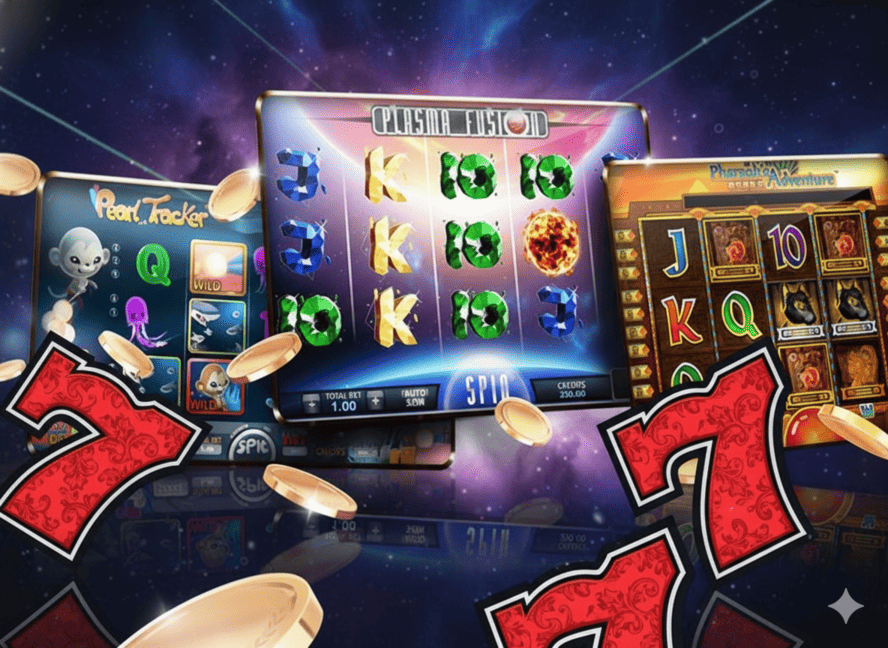
As a technical auditor who has spent over a decade reverse-engineering slot mathematics and analyzing RNG source codes, I can confidently tell you that the era of simple, spinning reels is long dead. In 2026, modern slot machines are complex software ecosystems governed by multi-layered algorithms. When players load up their favorite titles on cutting-edge platforms like Bassbet, they are often entirely unaware of the intricate, hidden features actively shaping their gameplay and supercharging their bonus rounds. Today, I am moving past the generic advice of “managing your bankroll” to expose the actual backend architectures and hidden mathematical triggers that slot providers use to dynamically alter the potential of your bonus features.
Feature 1: Persistent State Memory and Stateful RNG
Historically, slot machines operated on a purely “stateless” Random Number Generator (RNG), meaning every single spin was an independent event with the exact same mathematical probabilities. While the base RNG remains independent to satisfy regulatory bodies, modern game studios have introduced a secondary layer known as Stateful RNG or Persistent State Memory.
How Statefulness Alters the Math Model
When you play a modern grid slot or a progression-based game, you are often collecting tokens, filling a meter, or unlocking visual map levels. What is hidden from the player is that these visual collections are actively rewriting the math model of the bonus round before it even triggers. The game’s software allocates a specific percentage of the overall Return to Player (RTP) exclusively to this saved state.
Here is a technical breakdown of how persistent states compare to traditional mechanics:
| Feature Dimension | Traditional Stateless Slot | Modern Stateful Slot (2026) |
| Bonus Trigger Probability | Static (e.g., 1 in 250 spins) | Dynamic (Increases as state advances) |
| Bonus Multiplier Seed | Fixed starting point | Scales based on base game tokens collected |
| RTP Allocation | 100% active on every spin | 5-10% held in a mathematical escrow |
| Player Churn Rate | High during dead spin streaks | Low due to algorithmic sunken cost hooks |
When you trigger a bonus round with a fully charged persistent state, the game accesses a completely different set of virtual reel strips. These alternative reel strips have a higher density of premium symbols and wild multipliers, drastically boosting the payout potential compared to triggering the bonus on your very first spin.
Feature 2: Dynamic Volatility Shifting
One of the most guarded secrets in the 2026 slot development industry is Dynamic Volatility Shifting. Players often assume a game is just generally “high volatility” or “low volatility.” In reality, the most popular modern games utilize an engine that shifts the volatility index in real-time based on the immediate history of the current session.
The Mechanism of Hit Rate Suppression
To create those massive, viral bonus round payouts, the math model must pull funds from the base game. If the algorithm detects that you have experienced an unusually long streak of dead spins, it initiates a protocol I call Hit Rate Suppression. The game temporarily lowers the frequency of small, meaningless base game wins. However, it simultaneously increases the weighting of top-tier symbols on the bonus reels. If you trigger the bonus round during a phase of maximum volatility shifting, the mathematical ceiling of that bonus round is entirely unlocked. The algorithm is essentially balancing its localized RTP ledger by allowing the bonus feature to explode, utilizing the funds absorbed during the dead spin phase.
Feature 3: Weighted Scatter Pathing and Teaser Mechanics
We have all experienced the heart-pounding moment when two scatter symbols land on the first two reels, the screen darkens, the music intensifies, and the final reels spin in slow motion. While this seems like pure visual entertainment, there is a complex hidden feature at play called Weighted Scatter Pathing.
Algorithmic Recalibration Mid-Spin
In advanced 2026 slot titles, the moment the first two scatters land, the game’s internal processor actually recalibrates the RNG weighting of the remaining reels. The “teaser spin” is not just for dramatic effect; it is a micro-loading screen where the game decides the quality of the impending bonus round. If the third scatter lands during a highly weighted pathing sequence, the internal seed generated for the bonus round is immediately injected with a “feature boost.” This might manifest as an extra starting free spin, an immediate
+2+2to the global multiplier, or the removal of the lowest-paying symbol from the grid. The game rewards the mathematical rarity of completing a difficult scatter path by secretly buffing the bonus parameters.
Feature 4: Accumulative RTP Micro-Pools
A major innovation in the current generation of slot software is the integration of Accumulative RTP Micro-Pools. Unlike progressive jackpots, which are highly visible and life-changing, micro-pools are completely invisible and operate on a much smaller scale, often localized to a specific casino operator or a small cluster of players.
Understanding the Escrow Injection
In these games, a tiny fraction of every bet (usually around 0.5%) is diverted into a hidden RTP pool. When this algorithmic pool reaches its predefined threshold, the game enters a “primed” state. The next player to trigger a bonus round on that specific server node will unknowingly absorb this entire micro-pool.
You can sometimes identify these games by observing the payout distributions in the paytable. If a game advertises an RTP of 96.5% but the math breakdown only accounts for 94%, that missing 2.5% is often functioning as an accumulative micro-pool. When your bonus round is injected with this pool, the game forces high-paying connections to drain the escrow, resulting in a bonus feature that pays out 500x to 1000x your bet with astonishing ease.
Feature 5: Algorithmic Pity Timers and Bonus Guarantees
Regulators have become increasingly strict about the psychological impact of extreme volatility. To combat player fatigue and ensure compliance with 2026 consumer protection standards, developers have quietly integrated Algorithmic Pity Timers, known internally as Bonus Fail-Safes.
The Hidden Floor of Bonus Math
A pity timer is a line of code that monitors the exact number of spins since your last feature trigger. If a player reaches a statistical outlier, for example, going 800 spins without a bonus on a game that averages a bonus every 200 spins, the algorithm intervenes. It does not force the bonus to trigger, as that would violate RNG randomness. Instead, when the bonus finally does trigger naturally, the game reads the pity timer flag and shifts the bonus math model to its absolute highest payout tier. It activates guaranteed wild placements or sticky multipliers that mathematically cannot result in a low payout. This hidden feature ensures that players who endure brutal mathematical variance are rewarded with a heavily boosted bonus round when the variance finally breaks.
Frequently Asked Questions
What happens to my persistent state memory if I close the browser or lose connection?
In 2026, persistent state tokens are saved directly to the casino’s secure servers, tied to your unique session ID and account profile, rather than stored locally on your device cache. If you lose connection or close the game, your exact mathematical state, including any built-up bonus potential, is paused and securely encrypted. When you reopen the game, even days later, the server recalls that state matrix, allowing you to resume exactly where you left off without losing your algorithmic progress.
Can a casino operator manually adjust these hidden bonus features?
Absolutely not. The mathematical algorithms, including dynamic volatility engines and accumulative micro-pools, are hardcoded directly into the game provider’s source code (e.g., Pragmatic Play, Hacksaw Gaming). Casino operators merely host the front-end user interface. Any attempt by an operator to alter these hidden features would instantly invalidate the cryptographic hashes certified by regulatory bodies like eCOGRA or the Malta Gaming Authority, resulting in immediate license revocation.
Do “Bonus Buy” features bypass the accumulative RTP pools?
Yes, they completely bypass them. When you purchase a bonus feature directly for 100x or 200x your stake, you are utilizing a secondary, entirely separate mathematical model designed strictly for instant access. The accumulative micro-pools and persistent state mechanics are explicitly designed to reward the grind of the base game. Buying the bonus gives you access to a standardized, highly volatile RNG seed, but you forfeit the hidden boosts generated by long-term algorithmic escrow.
What is the mathematical significance of near-miss scatters?
Near-misses are highly calculated events. They are not simply bad luck; they are a psychological and mathematical tool. In games with Weighted Scatter Pathing, a near-miss often signals that the internal RNG cycle is shifting away from hit rate suppression and towards a state of higher volatility. While a near-miss does not guarantee a bonus on the next spin, it indicates that the virtual reel strips currently active in your session matrix contain the higher density of scatters required to trigger a boosted feature.
Are pity timers legally mandated by 2026 gaming regulators?
While not universally mandated by law, they have become an industry standard requirement for passing the rigorous behavioral compliance tests introduced in recent European and North American gaming directives. Regulators now require game studios to prove that their maximum volatility math models do not lead to endless, mathematically improbable losing streaks. Pity timers act as the mathematical fail-safe that keeps the software compliant with consumer fairness regulations.
How does dynamic volatility shifting affect progressive jackpots?
Dynamic volatility shifting exclusively manipulates the standard paytable and the internal bonus feature triggers. Progressive jackpots are governed by an entirely separate, isolated RNG module that is completely independent of your base game dead spin streaks or localized session volatility. Therefore, shifting base game volatility has zero mathematical impact on your chances of hitting a networked progressive jackpot.
Is it possible to visually identify when a slot shifts its internal math model?
Developers intentionally mask these shifts to maintain the illusion of seamless gameplay, but expert players can spot subtle tells. Pay attention to the frequency of low-tier symbol combinations. If a game that previously awarded frequent small wins suddenly goes entirely cold for 50 spins, yet drops two scatters with unusual frequency, you are likely witnessing Hit Rate Suppression. This visual dead zone is the primary indicator that the game’s internal math is building potential for a highly volatile, boosted bonus round.
Do multi-layered state engines change the overall advertised RTP of the game?
They do not change the total theoretical RTP, but they drastically alter how that RTP is distributed over time. If a slot advertises a 96% RTP, a traditional slot distributes that evenly across all spins. A multi-layered state engine might distribute 80% during normal spins, hold 10% for the persistent state unlock, and reserve 6% for the accumulative micro-pool. The final mathematical sum is identical, but the player’s localized experience of that RTP is vastly different.
Why do some bonus rounds guarantee a minimum win even without an advertised pity timer?
This is an anti-frustration mechanic built directly into the bonus algorithm. If a player triggers a highly volatile bonus round and the initial RNG seeds result in a 0x payout, the software triggers a hidden “re-spin” or “minimum win guarantee” loop. The algorithm literally rejects the dead outcome and forces the reels to spin again until a pre-determined minimum threshold (e.g., 10x the bet) is met, ensuring the mathematical integrity of the bonus feature’s intended value.
How has the integration of AI in 2026 changed scatter weighting?
Modern game engines now utilize lightweight machine learning algorithms to dynamically adjust scatter weighting based on global player interaction data. If the AI detects that a specific bonus pathing sequence causes a high rate of player abandonment, it will subtly recalibrate the virtual reel strips in subsequent software patches to smooth out the mathematical variance. This ensures that the teaser mechanics remain engaging without breaking the strict statistical boundaries set by the game’s original math model.
Conclusion
The landscape of slot machine mathematics in 2026 is a fascinating intersection of behavioral psychology, advanced software engineering, and rigorous statistical modeling. The days of treating slots as simple, pull-and-pray mechanical devices are entirely obsolete. By understanding that modern algorithms utilize persistent state memory, dynamic volatility shifting, and localized RTP micro-pools, you elevate your perspective from a casual gambler to an informed strategist. These hidden features are not designed to cheat the player; rather, they are sophisticated mechanisms engineered to create deep, engaging gameplay loops where mathematical variance is carefully managed to deliver those explosive, highly anticipated bonus rounds.
For the modern player, this profound shift in software architecture necessitates a complete reevaluation of session strategy. Recognizing the signs of hit rate suppression or understanding the true value of accumulative RTP pools allows you to make highly educated decisions about when to push a session forward and when to walk away. You are no longer just fighting random numbers; you are interacting with a highly responsive, stateful mathematical engine. By adapting to these unseen algorithmic realities, you position yourself to extract the maximum potential from every bonus round you trigger, turning hidden developer mechanics to your tactical advantage.